What are the 6 hidden causes?
1. Slab leak
A pipe under the concrete leaks and water rises through the slab into the carpet pad. A warm damp spot points to a hot water line. Our signs of a slab leak guide lists the other clues.
2. Supply or drain line in a wall
A pinhole in a copper line or a loose drain fitting behind a bathroom or kitchen wall can soak the bottom plate and wick into the carpet next to it.
3. AC condensate line
Indoor air handlers drip water into a drain line. A clog or crack sends it along the floor, often near a hall closet. This is common in the hot months.
4. Water heater, washer or fridge line
Water can travel under a wall from a garage water heater or laundry room. See our appliance water line leaks guide.
5. Outdoor water at the slab edge
Sprinklers aimed at the wall, a low planter or poor grading can push water under the baseboard after watering or a storm.
6. Condensation
Rare in Murrieta's dry climate, but a cold slab under an air vent can sweat in humid weather. It shows as a thin, even dampness, not a growing patch.
What can I check myself?
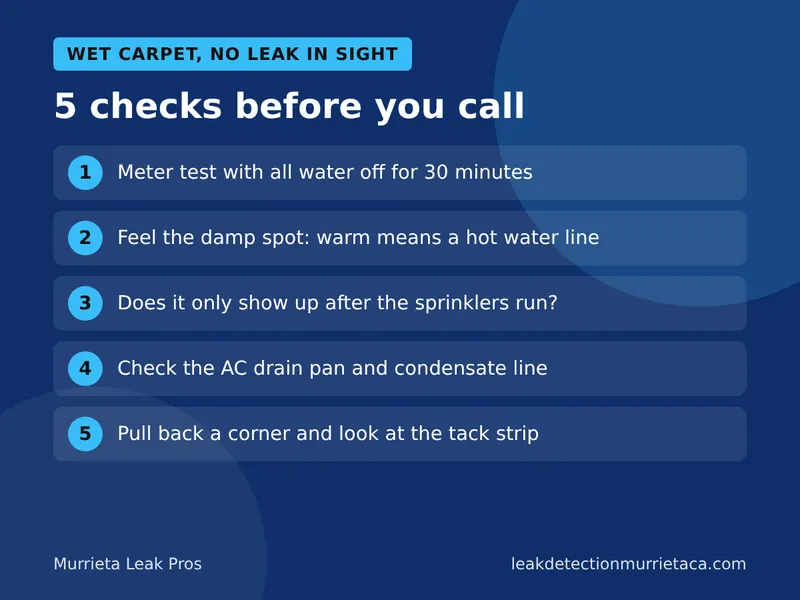
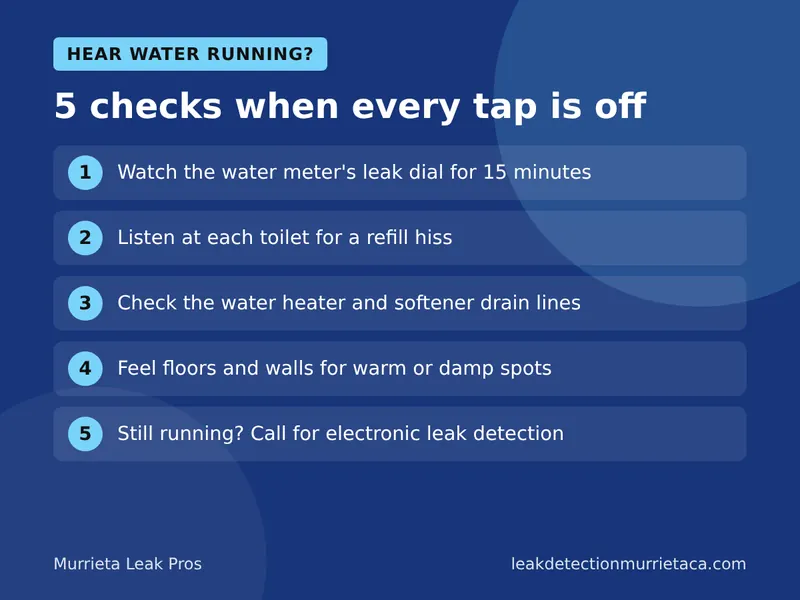
- Meter test. Turn off every faucet and appliance and watch the meter's low-flow dial for 30 minutes. Movement means a supply leak. See our water meter leak test.
- Feel for warmth. A warm wet patch suggests a hot water line.
- Check after watering. If the spot only appears after sprinklers run, the source is outside.
- Look at the AC. Check the drain pan and line near the indoor unit.
- Lift a corner. Pull back the carpet at the wall with gloves. Wet tack strip and a dark slab show where water enters.
Dry the area with fans, and do not leave a wet pad for days. Mold can start in 24 to 48 hours. Our mold from a hidden water leak guide explains what to watch for.