24/7 — Emergency Leak Detection Available Day or Night(951) 299-3473

7 Signs of a Slab Leak in Your Murrieta Home

A slab leak is a leak in a water pipe buried under your home's concrete foundation. Many Murrieta homes are built on slabs, so these leaks are common here. If you notice any of the signs below, call (951) 299-3473. Our slab leak detection team can find the leak without tearing up your floors.

What is a slab leak?

A slab leak is a break or pinhole in a water line that runs under or inside a concrete slab foundation. Water escapes into the soil or up through the floor. You often cannot see it at first. Over time it can raise your water bill, damage flooring and weaken the soil under your home.

Slab leaks can affect hot or cold lines. A hot water slab leak is often easier to notice, because it warms the floor above it.
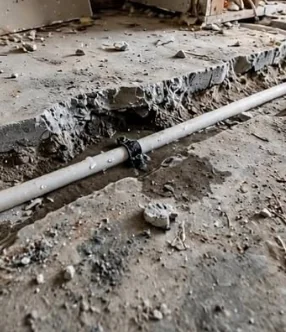
Water pipe exposed in a cut section of a concrete slab

What are the signs of a slab leak?

The most common signs are a water bill that jumps for no reason, warm spots on the floor, the sound of running water when every tap is off, damp carpet or warped wood, cracks in floors or walls, low water pressure and a water heater that runs all the time.

  1. Higher water bill. If your bill climbs while your habits stay the same, water is going somewhere. Compare it with the same month last year.
  2. Warm or hot spots on the floor. Walk barefoot on tile or concrete. A warm patch can mean a leaking hot water line below.
  3. Sound of running water. Turn off every fixture. If you still hear a hiss or trickle in a wall or floor, a pipe may be leaking.
  4. Damp carpet or warped flooring. Wet carpet pads, cupping hardwood or lifting vinyl plank often show up near the leak.
  5. Mildew smell or mold. Moisture trapped under flooring can cause a musty smell, even when you see no water.
  6. Cracks in floors or walls. Water can wash out or swell the soil under the slab. New cracks in tile, drywall or baseboards are a warning sign.
  7. Low pressure or a busy water heater. A leak steals pressure from your faucets. A water heater that runs non-stop may be refilling a leaking hot line.

One sign alone may have another cause. Two or more signs together is a strong reason to get a water leak detection visit.

Why are slab leaks common in Murrieta?

Many Murrieta homes sit on concrete slabs with copper water lines buried underneath. Clay-rich soil swells when wet and shrinks when dry, which puts stress on pipes. Hard water also wears on copper from the inside. Together, these raise the chance of a pinhole leak.

Homes in established tracts such as Bear Creek and the older streets of Historic Murrieta have had more years of this wear. Newer homes in Copper Canyon can still leak, often where a pipe rubs against concrete or rebar.

Have a leak? Don’t wait for it to get worse.

Our technicians are standing by 24/7 with the equipment to find your leak fast. No unnecessary digging, no guesswork.

How can I check for a slab leak myself?

You can do a simple meter test. Turn off every faucet, toilet, sprinkler and appliance. Then look at your water meter. If the small leak indicator still spins or the reading changes over 30 minutes, water is leaking somewhere on your side of the meter.

  1. Find your meter box, usually near the curb. Your water comes from Eastern Municipal Water District or Rancho California Water District, depending on your street.
  2. Shut off all water use inside and outside, including the irrigation timer.
  3. Write down the meter reading, or watch the small triangle or dial.
  4. Wait 30 minutes with no water use, then check again.
  5. If it moved, close your main shut-off valve at the house and check once more. If it stops, the leak is inside the house. If it keeps moving, the leak may be in the line between the meter and the house.

The meter test tells you if there is a leak. It does not tell you where. That is what professional detection is for.

How do professionals find a slab leak?

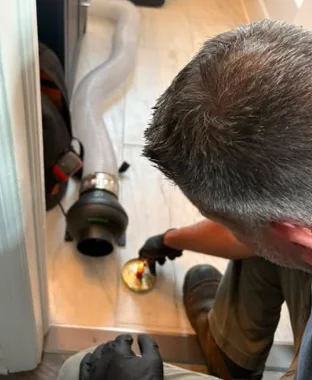
A technician first isolates the hot and cold lines with a pressure test. Then they use acoustic listening equipment to hear the leak through the concrete, and infrared thermal imaging to spot heat from hot water lines. The goal is to mark the leak within a small area before anyone cuts concrete.

Common slab leak detection tools
ToolWhat it does
Pressure testShows which line is leaking: hot, cold or both
Acoustic listening deviceHears water escaping under the slab
Thermal imaging cameraFinds warm spots from hot water leaks
Moisture meterConfirms wet flooring and walls near the leak

How much does slab leak detection cost in Murrieta?

Slab leak detection in Murrieta costs about $250 to $650 for a typical home, or about $450 to $900 for a larger home with several lines to test. A spot repair through the slab often runs about $1,500 to $5,000. Your price is confirmed before work begins.

Approx. costs (estimates for planning only)
ServiceApprox. cost
Slab leak detection (typical home)$250 to $650
Larger home or several lines$450 to $900
Spot repair through the slab$1,500 to $5,000
Re-route the line through walls or attic$2,500 to $8,000

Repair choices include a spot repair through the slab, rerouting the line through walls or the attic, or pipe lining. Learn more on our leak repair and trenchless pipe repair page.

What should I do right now if I think I have a slab leak?

If water is pooling or the floor is wet, close your main shut-off valve. If you have a hot water leak, you can also close the cold supply valve on top of your water heater. Move rugs and furniture off wet areas, take photos for insurance, and call for detection.

Do not start breaking tile or concrete to look for the leak. You may open the wrong spot and add to the repair bill.

Frequently asked questions

Is a slab leak an emergency?

It can be. If water is surfacing through the floor or your bill has jumped sharply, call right away. A small leak can still wash out soil under the slab over time, so it should not wait long.

Does homeowners insurance cover slab leaks?

Many policies cover water damage from a sudden leak and the cost to access the pipe, but not always the pipe itself. Check your policy and take photos before cleanup.

Can you find a slab leak without breaking the floor?

Yes. Acoustic and thermal tools let a technician pinpoint the leak from above the floor. Concrete is only opened at the marked spot if you choose a direct repair.

How long does slab leak detection take?

Most visits take about one to three hours, depending on the size of the home and how many lines need testing.

Can a slab leak fix itself?

No. A leaking pipe under pressure usually gets worse, not better. The hole tends to grow as water and minerals keep wearing on it.

Prices are approximate estimates for planning. Your final price depends on your property and is confirmed before work begins.

Ready to find your leak?

Our technicians are standing by 24/7 with the equipment to find your leak fast. No unnecessary digging, no guesswork.

Call Now — (951) 299-3473