24/7 — Emergency Leak Detection Available Day or Night(951) 299-3473

Water Under the Kitchen Sink? How to Find the Leak in Murrieta

Finding water under the kitchen sink is common, and the cause is usually close by. The trick is to find which part is wet before the cabinet floor swells or mold starts. This guide walks you through the six places a kitchen sink leaks, a quick test for each and when the water may be coming from inside the wall. Our water leak detection team serves all of Murrieta 24/7 at (951) 299-3473.

Why is there water under my kitchen sink?

Most sink cabinet leaks come from the drain trap, the sink strainer, the faucet base, the hot or cold supply lines, the shut-off valves or the dishwasher hose. Less often, water comes from a pipe inside the wall behind the cabinet. A leak that only shows up when you run water points to the drain. A leak that drips all the time points to the supply side.

Empty the cabinet, dry everything with a towel and lay a sheet of paper towel on the cabinet floor. Fresh drips will show up as wet spots, which tells you where to look above.
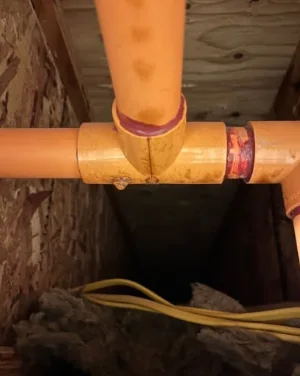
Orange CPVC pipe tee and repaired joints inside a framed wall cavity

Where do kitchen sink leaks usually start?

The top six spots are the P-trap slip nuts, the basket strainer seal, the faucet base and sprayer hose, the braided supply lines, the angle stop valves and the dishwasher drain or supply hose. Each one leaves a clue: where the water drips and whether it leaks with the tap on or off.

Kitchen sink leak spots and how to spot them
PartWhen it leaksWhat you may see
P-trap and slip nutsOnly when drainingDrips from the curved pipe or its nuts
Basket strainerWhen the sink is fullWater around the drain under the sink bowl
Faucet base or sprayer hoseWhen the tap runsWater on top of the sink deck or down the hose
Supply linesAll the timeWet braided hose or a drip at the nut
Shut-off valvesAll the timeCrust or drip at the valve stem
Dishwasher hosesDuring a cycleWater near the hose clamp or air gap

How can I test each part myself?

Test one part at a time. Run the tap with the drain open, then fill the sink and let it drain, then run a dishwasher cycle. Between each test, wipe the pipes with a dry paper towel. The first towel that comes away wet shows you the leak. Hand-tighten loose slip nuts first; do not crank them with a wrench.

  1. Supply test. With no water running, wipe the supply lines and valves. Wet means a supply leak.
  2. Faucet test. Run the tap for one minute and check the faucet base and sprayer hose.
  3. Drain test. Fill the sink halfway, pull the plug and watch the strainer and trap.
  4. Dishwasher test. Start a short cycle and watch the hose clamp at the drain or disposal.
  5. Disposal test. If you have a garbage disposal, check its bottom and side ports with a flashlight.

Hard water is a big factor here. Murrieta water leaves white crust on valves and fittings, and that crust can hide a slow drip for months.

Have a leak? Don’t wait for it to get worse.

Our technicians are standing by 24/7 with the equipment to find your leak fast. No unnecessary digging, no guesswork.

What if every part under the sink is dry?

If the parts are dry but the cabinet floor or back wall stays damp, the leak may be inside the wall, at the floor, or from the dishwasher or fridge line nearby. Signs include a soft cabinet floor, stains on the back panel, a musty smell, or swollen baseboards next to the cabinet. This is when non-invasive leak detection helps.

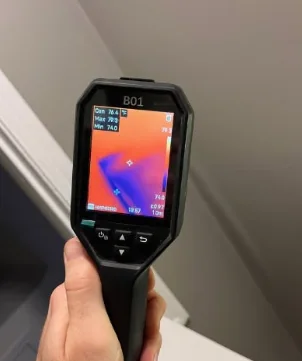
Our technicians use moisture meters and thermal imaging to trace water inside walls without cutting first. See how leak detection works for the tools, and signs of a leak behind a wall for more clues. If the fridge sits next to the sink, our guide to appliance water line leaks covers ice maker and dishwasher lines.

Can a slow sink leak cause bigger damage?

Yes. A slow drip soaks the particleboard cabinet floor, which swells and crumbles. Water then runs under the cabinet into the subfloor or slab edge, and mold can grow in a few days. A leak that runs all the time also adds to your water bill. Fixing it early is almost always cheaper.

If you see dark spots or notice a musty smell, read our guide to mold from a hidden leak. To stop water in a hurry, close both angle stops under the sink, or see how to shut off your water for the main valve.

How much does it cost to find and fix a sink leak?

A loose slip nut or a worn supply line is a small fix. When the leak is inside the wall or floor, you pay for detection plus the pipe repair. Here are approximate Murrieta ranges for planning.

Approx. costs in Murrieta (estimates for planning only)
ServiceApprox. cost
Hidden water leak detection visit$200 to $550
Slab leak detection (typical home)$250 to $650
Spot repair on an accessible pipe$300 to $1,500

We help homeowners in Historic Murrieta, Bear Creek, Los Alamos Hills and across the city. Our leak repair team gives you the price before any work starts.

Frequently asked questions

Why is my sink cabinet wet but I can't see a leak?

The drip may only happen when you drain the sink or run the dishwasher. Test each part with the water on and off, using a dry paper towel. If all parts stay dry, the leak may be in the wall.

Can I tighten a leaking P-trap myself?

Yes. Hand-tighten the slip nuts first. If the leak continues, the washer inside may be worn or the trap may be out of line.

How often should sink supply lines be replaced?

Many plumbers suggest replacing braided supply lines about every 5 to 10 years, or sooner if you see rust, bulges or crust.

Can a dishwasher leak show up under the sink?

Yes. The dishwasher drain hose and supply line both run through the sink cabinet, so a leak there often shows up under the sink.

Prices are approximate estimates for planning. Your final price depends on your property and is confirmed before work begins.

Ready to find your leak?

Our technicians are standing by 24/7 with the equipment to find your leak fast. No unnecessary digging, no guesswork.

Call Now — (951) 299-3473